ServicesMetal Roofing
Metal Roofing in Hilliard, Fitted to the House Underneath
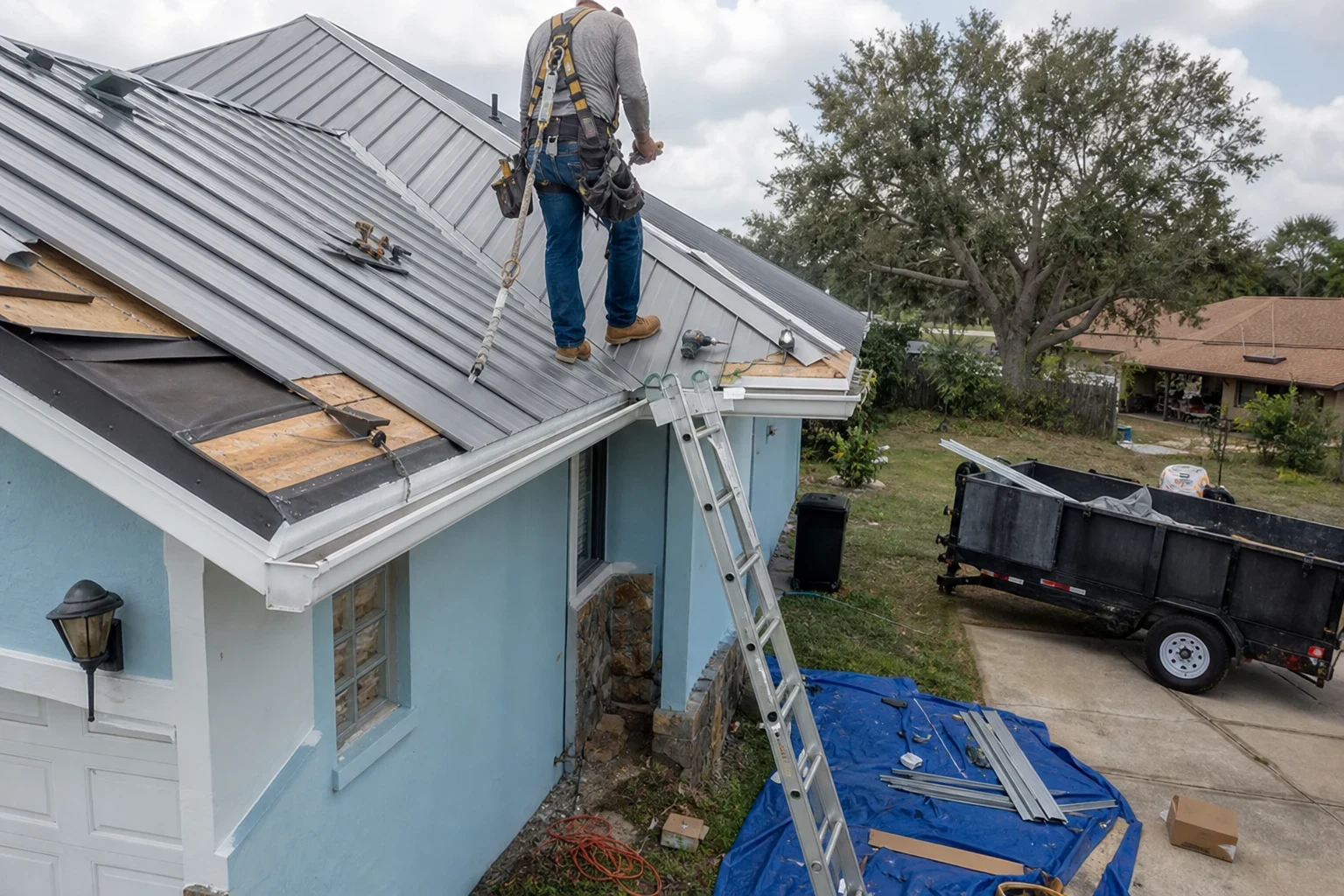
We install standing seam and screw-down metal roofs on homes with a few decades behind them. Before a panel goes up, we strip the old layers, check the decking and fix what past repairs left behind. You get a roof that sheds rain and holds in wind, fastened to solid wood.
When metal makes sense for your home
A metal roof lasts a long time, sheds heavy rain fast and holds up to strong wind when it's fastened right. It also costs more up front than shingles. For homeowners who plan to stay put, that trade is often worth it. For others, a shingle roof replacement is the better buy, and we'll tell you so.
Older houses add a wrinkle. Under the shingles we often find two layers of roofing, plank decking with gaps, a vent pipe sealed with tar, or a chimney flashed three different ways. Metal is stiff. It won't hide a dip in the deck or a rotted board. So we treat the tear-off as the real inspection and fix what's there before the panels go on.
We're a licensed general contractor. When the tear-off turns up bad decking or soft fascia, we fix it on the same job instead of sending you to someone else.
What a metal roof job includes
- 01
Tear-off down to the deck
We remove every old layer, not just the top one. That's the only way to see rot, old nail holes and patched spots on an older home.
- 02
Decking repair
Gapped plank boards or soft plywood get replaced or covered with new sheathing. Panels need a flat surface, and screws need solid wood to bite into.
- 03
Heat-rated underlayment
Panels soak up a lot of sun, and the deck right under them gets hot. We put down a synthetic underlayment made to handle high heat. It also catches any water that ever slips past a panel.
- 04
Panels, trim and fasteners
Standing seam with hidden clips, or exposed-fastener panels with sealed screws. We walk you through both. Trim at the eaves, rakes, ridge and valleys is fitted to your roof lines.
- 05
New flashing at every opening
Old lead pipe boots, tar patches and reused step flashing come off. Chimneys, vents and wall joints get new metal flashing that matches the roof.
- 06
Ventilation and cleanup
We check attic airflow and add ridge vent where it helps. At the end of the job we magnet-sweep the yard and haul everything away.
Questions about Metal Roofing?
Call(904) 709-7985Signs metal may be your next roof
Your shingles are wearing out again
If your home is on its second or third shingle roof, metal can end that cycle. It's one bigger bill instead of reroofing every couple of decades.
Patches on top of patches
Tar around the vents, shingles that don't match, a ridge that's been redone twice. When repairs keep stacking up, starting over usually costs less in the long run.
Wind keeps lifting shingles
Creased or missing shingles after summer storms mean the roof is losing its grip. A properly fastened metal roof holds on better.
Old screw-down metal is leaking
Older metal roofs leak when the rubber washers dry out and screws back out. Sometimes new screws fix it. If the panels are rusted through, it's time for new metal.
Hot rooms under the roof
Lighter metal colors reflect more sun than dark shingles. Paired with better attic airflow, that can take some heat off the rooms below.
The steps of a metal roof job
- 1
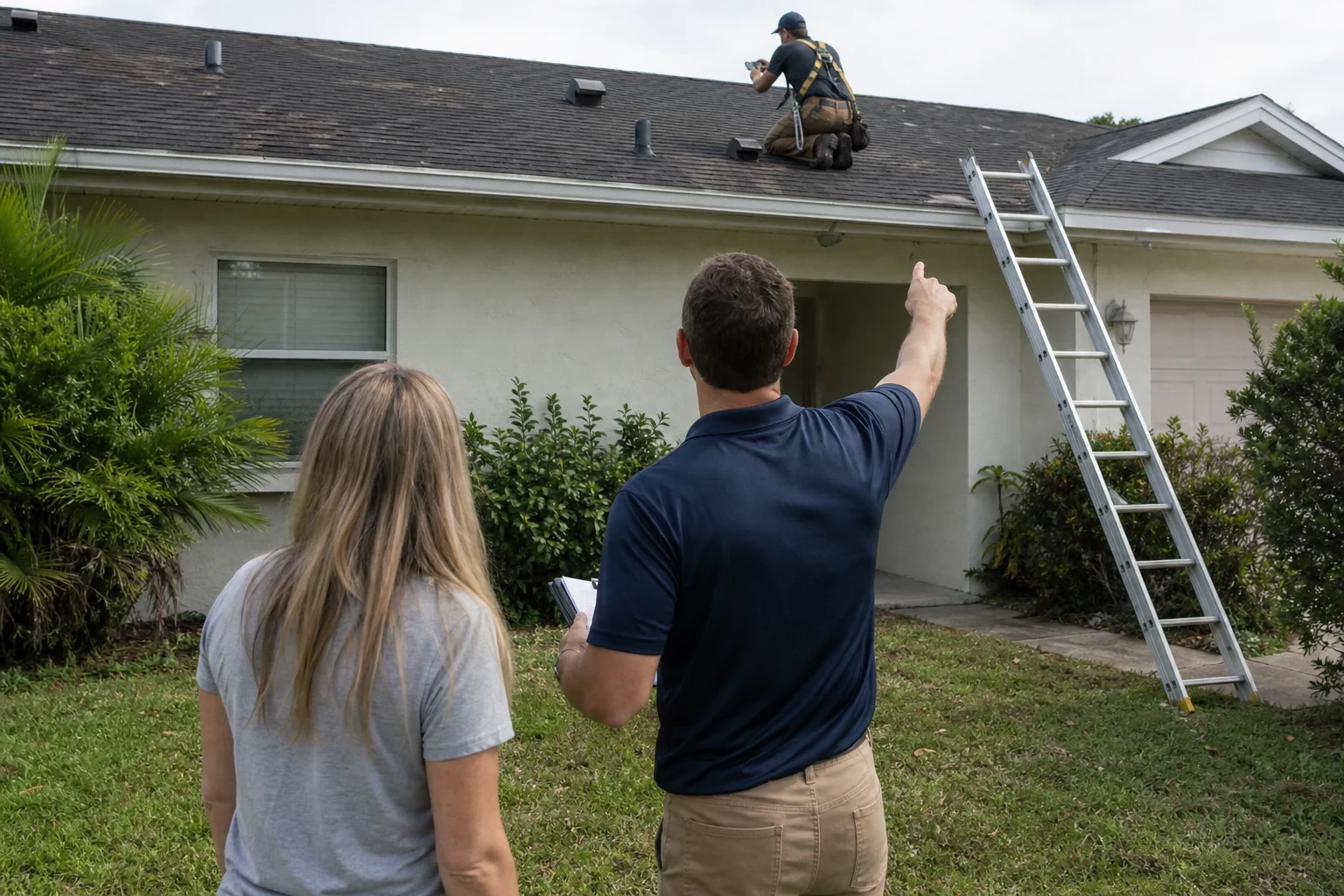
A free look and written price
We climb the roof and, when there's a way in, check the attic. We take measurements, view the decking from underneath and write down past repairs. Your written estimate breaks out panels, trim, underlayment and a separate line for deck repair.
- 2
Permit and material order
We handle the permit. Panels are typically cut to the exact length of each roof section, so we recheck every measurement before placing the order.
- 3
Old roof off, deck fixed
We remove the old roof a section at a time so your house is never left exposed. Damaged wood is replaced, and you see photos of it before it gets covered.
- 4
Underlayment, panels and flashing
Underlayment is laid first, followed by edge trim, then panels running from eave up to ridge. We bend and fit flashing for chimneys and walls right on site.
- 5
Last check and walk-through
We walk the finished roof with you, the inspector gives the sign-off and we sweep the yard. The job is backed by our 5-year workmanship warranty.
What changes the cost of a metal roof
Your price comes from measuring the roof and seeing its condition from on top and from the attic. The type of panel and the shape of your house make the most difference. We list panels, trim, underlayment, labor and decking on separate lines instead of one lump sum. If you'd like to pay over time, financing is available.
- Panel type: standing seam or screw-down
- Standing seam goes on with concealed clips and takes more labor, so it runs higher. Screw-down panels are cheaper to start, though the screws need checking as the years go by.
- Size and shape of the roof
- Every valley, hip and dormer adds trim pieces and cuts. A simple gable goes up quicker than a roof with many angles.
- Old roofing and the deck below
- Removing two or three old layers takes more time and more hauling. Rotten or gapped boards add lumber and hours.
- Chimneys, skylights and vents
- Every chimney, skylight and pipe gets flashing of its own. Older brick chimneys often take extra work to seal properly.
- Steel gauge and coating
- Thicker steel and higher-grade paint finishes cost more and last longer, most of all close to salt air.
Metal roofing questions we hear
Can you put metal right over my old shingles?
On an older home we almost always recommend tearing off. Old layers hide rot and soft spots, and metal laid over a wavy surface shows every dip. Taking it down to the deck lets us fix what's there and fasten into solid wood.
Will I hear every raindrop with metal?
Not on a house like yours. The panels sit on wood sheathing with underlayment between, and your attic insulation dulls most of what's left. The drumming people remember usually comes from metal fastened to open rafters over a barn or carport.
Will it rust?
Coated steel holds up well inland when it's installed right. Closer to salt air, like Fernandina Beach, we'll talk about heavier coatings or aluminum. We also keep copper and steel from touching, since mixed metals corrode each other.
Will insurance pay for a metal roof?
If storm damage is behind the new roof, insurance covers what your policy covers. That's often like-for-like, so the step up to metal may be your cost. On a storm claim, we meet with your adjuster ourselves and point out which costs come from the damage and which come from the upgrade.
How long does the work take?
It depends on the size of the roof and how much decking needs repair. Panel ordering adds lead time before we start. We'll give you a start date and tell you if weather moves it.
Talk through metal for your home
Tell us about your house and the roof on it now. We'll come look at the deck and the old repairs, then give you a free, no-obligation estimate.